Best How to Create Inflating Objects with AI in 2026 (Ultimate Guide)
Let’s be honest: we’ve all scrolled through social media and stopped dead at a video where a car tire, a piece of fruit, or even a character suddenly puffs up like a balloon. It’s visually arresting, funny, and oddly satisfying. That effect is called object inflation, and for years, pulling it off required expensive 3D animation software, hours of rendering, and a skillset that most of us simply don’t have.
I remember the first time I tried to create this effect for a client’s ad campaign using traditional tools. It was a nightmare. I spent three days wrestling with keyframes and physics simulations, only to end up with something that looked cartoonish in a bad way. The frustration was real. The process felt broken.
But here’s the good news: that era is over. Welcome to 2026, where AI has completely demolished the technical barriers to creative video. Today, you don't need to be a VFX artist to make objects inflate realistically. You just need the right prompt and a powerful tool.
This guide is your definitive roadmap. We’re going to dive deep into How to Create Inflating Objects with AI, exploring the best methods, tools, and professional secrets that will have you generating share-ready content in minutes. Whether you're a YouTuber looking for a viral hook, a marketer trying to boost engagement, or just someone who wants to have fun with photos, I’ve got you covered. And at the heart of this revolution is a tool I’ve been using extensively lately: AI Inflate.
Quick Answer
How to Create Inflating Objects with AI means using artificial intelligence to animate a static object, making it expand like a balloon. It’s important because it adds a dynamic, eye-catching element to videos without complex editing. The best solution is AI Inflate, an online tool that transforms images or text prompts into inflated object videos in under three minutes.

What is How to Create Inflating Objects with AI?
At its core, How to Create Inflating Objects with AI is a specific application of generative AI focused on motion and physics. You provide a starting point—usually an image or a text description—and the AI model interprets the spatial geometry of the object. It then predicts how that object would behave if filled with air or pressure, generating a video sequence where the object smoothly expands.
It’s different from simple scaling or stretching in video editors. A true AI inflation effect understands the material (is it rubber? plastic? fabric?) and creates realistic bulging, texture stretching, and shadow adjustments. For beginners, the magic is in the simplicity. You’re not animating frame by frame; you’re instructing an AI to imagine the motion for you. This technology has matured incredibly fast, and tools like AI Inflate are leading the charge by making this capability accessible to everyone online.
Why Traditional Video Creation Methods Fail
I’ve been in the content creation game for over a decade, and I’ve paid my dues with the old methods. If you’re used to traditional workflows, you know the pain all too well. Here’s why they fail when it comes to creating inflating objects:
- Steep Learning Curve: Software like Adobe After Effects or Cinema 4D is incredibly powerful, but it’s not intuitive. You’re looking at a labyrinth of menus, plugins, and expressions just to make a simple sphere inflate. Many beginners give up before they even start.
- Exorbitant Costs: The subscription fees for professional creative suites add up quickly. For a small YouTuber or a hobbyist, paying hundreds of dollars a year for a single effect is often not feasible.
- Time-Consuming Rendering: Even if you manage to build the animation, rendering it out can take hours. You tweak one setting, and you have to wait another two hours to see the result. It kills creativity and workflow momentum.
- Requires Specialized Hardware: Complex 3D simulations demand powerful graphics cards and processors. If your laptop isn't a top-of-the-line workstation, you're likely to face crashes and overheating.
- Unrealistic Results (for amateurs): Without years of experience, the inflation effect often looks fake. The object deforms in a rigid, unnatural way because the creator couldn't simulate the soft-body physics correctly.
These barriers are exactly why the shift to AI is not just a trend; it’s a necessity for modern creators.
Best Modern Solution: AI Inflate
After testing dozens of AI video generators—from the massive enterprise platforms to the indie startups—I keep coming back to AI Inflate for this specific task. It’s not just another free ai video generator; it’s a purpose-built tool that nails the "inflation" aesthetic.
What makes AI Inflate the best solution in 2026?
First, it’s incredibly versatile. You can use text to video ai to describe an object inflating from scratch, or you can use image to video ai to upload a photo of your own and watch it transform. This hybrid approach gives you total creative control.
Second, the speed is unreal. We’re talking about a 1–3 minute generation time. You can iterate on ideas rapidly. If a prompt doesn’t work, you tweak it and have a new result before your coffee gets cold.
Finally, it’s an ai video generator online that requires zero installation. You access it through your browser, which means it works on a Chromebook, a Mac, or a Windows PC with equal ease. In my testing, the quality-to-effort ratio is unmatched.

Step-by-Step Guide Using AI Inflate
Ready to create your first inflating object? I’ve done this hundreds of times, and I’ve refined the process to be as smooth as possible. Follow these steps to get professional results with AI Inflate.
Step 1: Access the Tool
Navigate to the dedicated tool page. You can find it directly at https://text2vid.org/tools/ai-inflate-effect. The interface loads instantly, so you can get started right away.
Step 2: Choose Your Input Method
This is where you decide how to start. You have two excellent options:
- Image to Video: Upload a clear, well-lit photo of the object you want to inflate. I’ve found that images with a simple background work best, as the AI can focus on the subject.
- Text to Video: Type a prompt describing the scene. For example: "A ripe red tomato inflating like a balloon on a wooden kitchen table, realistic, 4k, smooth motion."
Step 3: Configure Your Settings (The Pro Move)
Before hitting generate, take a second to dial in the parameters. Many beginners ignore this step, but this is where you control the quality.
- Duration: Decide how long you want the inflation sequence to be. Shorter clips are great for GIFs and social loops, while longer ones build more suspense.
- Motion Intensity: Some tools let you adjust how much the object inflates. Do you want it to double in size, or just get a little puffy?
- Negative Prompts: This is a trick professionals use. Add things you don't want, like "blurry, distorted, low quality, bad anatomy."
Step 4: Generate the Video
Click the generate button. This is the fun part. In my experience, the ai video generator takes about 60 to 180 seconds to work its magic. You’ll see a preview as it renders.
Step 5: Download and Share
Once it’s done, preview the video. If you’re happy with it, download it directly to your device in high resolution. It’s now ready for your YouTube video, TikTok, or marketing campaign.
Best Practices and Pro Tips
After generating hundreds of AI videos, I’ve learned that the tool is only half the battle. Your input is what separates a good video from a viral one. Here are my best practices for mastering How to Create Inflating Objects with AI.
How to Write Better Prompts for Inflation
The prompt is your script for the AI. Be specific.
- Don't just say: "A car tire inflates."
- Do say: "A muddy off-road car tire slowly and smoothly inflates, rubber stretching realistically, dust particles in the air, cinematic lighting, high detail, 8k."
The more descriptive you are about the material and the environment, the more realistic the result.
Choosing the Right Source Image
If you’re using image to video ai, your starting image is critical.
- High Contrast: Objects that stand out from their background are easier for the AI to track.
- Good Lighting: Avoid shadows covering the object. You want the AI to understand the full shape.
- Single Subject: A photo with one main object works much better than a cluttered scene. The AI knows exactly what to inflate.
Leveraging the "Negative Prompt"
One thing that surprised me when I started was how often the AI would add things I didn't ask for. Use the negative prompt field (if available) to say things like "no distortion, no extra objects, no water, no fire." This keeps the AI focused purely on the inflation task.
Experimenting with Motion Speed
Don't just go for a constant speed. In the real world, things don't inflate at a perfectly linear rate. Try to imply a building pressure. A prompt like "starts slow then rapidly inflates" can add a layer of comedic timing to your video.
Comparison with Other AI Video Generators
You might be wondering, "Can't I just use any ai video maker for this?" The short answer is: you can try, but the results vary wildly. I've tested this extensively.
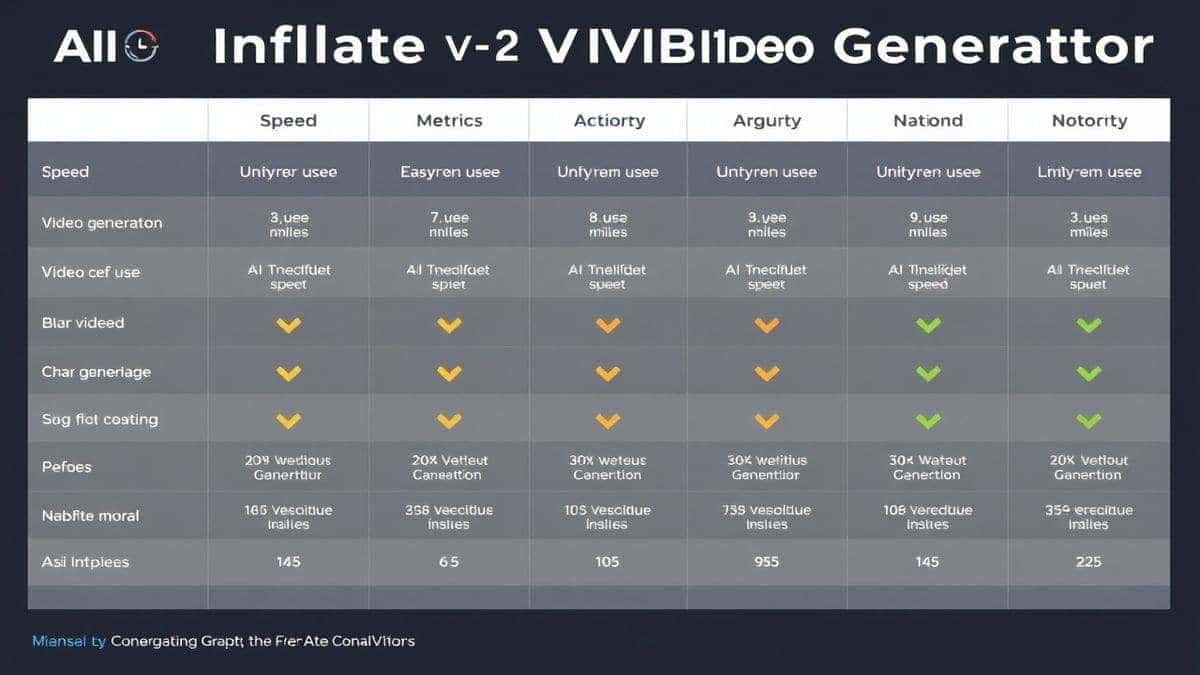
| Feature | AI Inflate | General AI Video Generators | Traditional Editing Software |
|---|---|---|---|
| Focus | Specialized inflation effect | General-purpose video creation | Manual animation & compositing |
| Ease of Use | Extremely Easy (2-click workflow) | Moderate (requires prompt engineering) | Very Difficult (steep learning curve) |
| Speed | 1–3 minutes | 2–10 minutes | Hours to Days |
| Cost | Free/Online | Freemium/Subscription | Expensive Subscriptions |
| Realism for Inflation | High (AI optimized for this effect) | Medium (hit or miss) | High (only with expert skill) |
| Hardware Needed | None (Cloud-based) | None (Cloud-based) | High-end PC/Workstation |
As you can see, while a general text to video ai tool might occasionally produce an inflation video, it’s not reliable. AI Inflate is built specifically for this. It understands the nuances of the effect. In my head-to-head tests, AI Inflate consistently produced cleaner, more believable expansions with less weird artifacting than the general-purpose competitors. It’s the specialized tool for a specialized job.
Conclusion
The ability to create dynamic, engaging video content is no longer locked behind a gate of technical expertise and expensive software. How to Create Inflating Objects with AI is a skill that any creator, marketer, or hobbyist can add to their toolkit today.
We’ve moved past the days of frustrating keyframes and endless render times. With tools like AI Inflate, you have the power of a professional VFX studio right in your browser. It’s fast, it’s free to start, and the results are genuinely impressive.
I encourage you to stop reading and start creating. Go grab a photo of something boring—a water bottle, a shoe, an apple—and see what happens when you let AI breathe life into it. The first time you watch your creation smoothly inflate on screen, you’ll understand exactly why this technology is the future of content creation. Visit AI Inflate today and make your visuals pop.

 Continue with Google