Imagine typing a few sentences about a product launch, a creative story, or a marketing pitch—and within minutes, watching it transform into a fully rendered video with visuals, motion, and style. That’s not a futuristic dream; it’s what’s possible right now with AI video generation.
I’ve spent the last several years deep in the trenches of AI content creation, testing image generators, video tools, and everything in between. One thing I can tell you with certainty: the landscape shifted dramatically in 2025, and by 2026, the ability to turn text into video is no longer a novelty—it’s an essential skill for creators, marketers, and businesses.
The problem is, most people still think video production requires cameras, actors, studios, or expensive software. They feel stuck, thinking they lack the skills or budget. I’ve been there myself. But after generating thousands of AI videos and experimenting with countless platforms, I’ve discovered a solution that cuts through the noise.
In this guide, I’m going to walk you through exactly How to Turn Text Into Video With AI, share my personal testing insights, and reveal a tool that has genuinely surprised me with its quality and simplicity: Free AI Video Generator Online – Text to Video & Image to Video. No login, no cost, and results in minutes.
Quick Answer
How to Turn Text Into Video With AI means using artificial intelligence to convert written descriptions into moving visual content. It’s crucial because it democratizes video creation, saving time and money. The best free solution is Free AI Video Generator Online – Text to Video & Image to Video, which lets you create clips instantly without login.
What is How to Turn Text Into Video With AI?
At its core, turning text into video with AI involves feeding a written prompt—a description of what you want to see—into a generative model that understands language, visuals, and motion. These models are trained on massive datasets of videos and images, learning how objects move, how scenes transition, and how styles evolve.
When you type something like "a astronaut riding a horse on Mars, cinematic lighting", the AI doesn’t just grab existing clips. It generates new footage frame by frame, interpreting your words to create a unique video. Some advanced tools also allow you to upload an image and animate it, which is where image to video ai comes into play.
From my experience working with AI image tools, the leap from static images to moving video felt like magic at first. But once you understand the mechanics, you realize it’s all about prompt craftsmanship and choosing the right engine. The best part? You don’t need to be a tech wizard to use it.
Why Traditional Methods Fail
Before AI, video creation was a grind. Let me break down why traditional methods simply can’t keep up with the demands of modern content creation:
- High Costs: Hiring videographers, renting studios, or buying camera gear can easily run into thousands of dollars. Even stock footage subscriptions add up.
- Time-Consuming: Scripting, storyboarding, filming, editing, color grading, and sound design—a 60-second video could take days or weeks.
- Skill Barriers: Not everyone knows how to use Adobe Premiere or After Effects. The learning curve is steep.
- Scalability Issues: Want to create 100 videos for a campaign? Good luck doing that with traditional production.
Many beginners don’t realize that even with a smartphone, producing polished, professional-looking videos consistently is incredibly difficult. I’ve tried the "just film it yourself" approach, and the results were shaky, poorly lit, and required hours of editing. It’s simply not sustainable if you need volume or quality.
Best Modern Solution: Free AI Video Generator Online – Text to Video & Image to Video
After testing dozens of platforms—some costing $30/month, others requiring complex setup—I kept coming back to one that balances ease of use, output quality, and a price tag that can’t be beaten: free.
Free AI Video Generator Online – Text to Video & Image to Video is exactly what the name promises. It’s a web-based tool that requires no sign-up, no credit card, and no software download. You simply visit the site, choose whether you want to start with text or an image, and let the AI work.
In my testing, I noticed that the generation speed is remarkably fast—often under a minute for a standard clip. The quality of the text to video ai output is competitive with paid tools I’ve used. The animations are smooth, and the adherence to prompts is impressive. One thing that surprised me was how well it handles complex scenes, like "a busy cyberpunk market with neon lights and flying cars." The detail was on par with some premium generators.
What sets this tool apart is its commitment to being free and accessible. In an industry where every other service is pushing subscriptions, finding a truly free ai video generator online that delivers is rare. It supports both text to video ai and image to video ai, making it incredibly versatile.
Step-by-Step Guide Using Free AI Video Generator Online – Text to Video & Image to Video
Let me walk you through exactly how to use this tool, based on my own workflow. I’ve tested this extensively and discovered a few tricks to get the best results.
Step 1: Access the Tool
Open your browser and go to Free AI Video Generator Online – Text to Video & Image to Video. You’ll land on a clean, distraction-free homepage. No pop-ups begging you to sign up, which is a refreshing change.
Step 2: Choose Your Input Mode
You have two primary options:
- Text to Video: Type a description of the video you want. Be as descriptive as possible. Instead of "a dog running," try "a happy golden retriever puppy running through a field of yellow flowers, slow motion, golden hour lighting."
- Image to Video: Upload an image (JPG or PNG) that you want to animate. The AI will analyze the image and create a video based on its content and your optional text prompt.
Step 3: Refine Your Prompt (Crucial!)
This is where experience matters. After generating hundreds of images and videos, I found that the AI responds best to specific details: subject, action, environment, lighting, mood, and camera angle. For example: "Cinematic close-up of a woman looking out a rainy window, tears streaming down, melancholic mood, 4k, film grain."
Step 4: Generate and Wait
Click the generate button. The processing time varies but is typically 30 to 60 seconds. You’ll see a preview once it’s done. One trick professionals use is to generate multiple variations of the same prompt to pick the best one.
Step 5: Download and Use
Once you’re happy with the result, download the video directly to your device. It’s ready to be used in social media posts, presentations, or as part of larger projects.
Best Practices and Pro Tips
Over the months, I’ve developed a set of best practices that consistently yield better videos from AI generators.
1. Write Detailed Prompts
Don’t be vague. Include style keywords like "cinematic," "anime," "realistic," or "3D render." Mention lighting: "soft diffused light," "neon glow," "dramatic shadows." Describe camera movement: "slow zoom in," "panning shot," "handheld style."
2. Start with Image to Video for Control
If you have a specific character or scene in mind, generate an image first (using a tool like Midjourney or even the same platform if it offers image generation) and then use image to video ai to animate it. This gives you more control over the composition.
3. Experiment with Different Styles
Many beginners don't realize that you can ask for different artistic styles. Try "oil painting style," "claymation," "cyberpunk," or "vintage film." The AI interprets these surprisingly well.
4. Use Short, Action-Oriented Prompts for Motion
For text-to-video, focusing on actions helps the AI generate movement. Instead of "a beautiful landscape," try "clouds moving quickly over a mountain landscape, time-lapse effect."
5. Check for Consistency
In my testing, I noticed that longer videos can sometimes have slight inconsistencies. If you need a longer clip, consider generating several short ones and editing them together.
Comparison with Other Tools
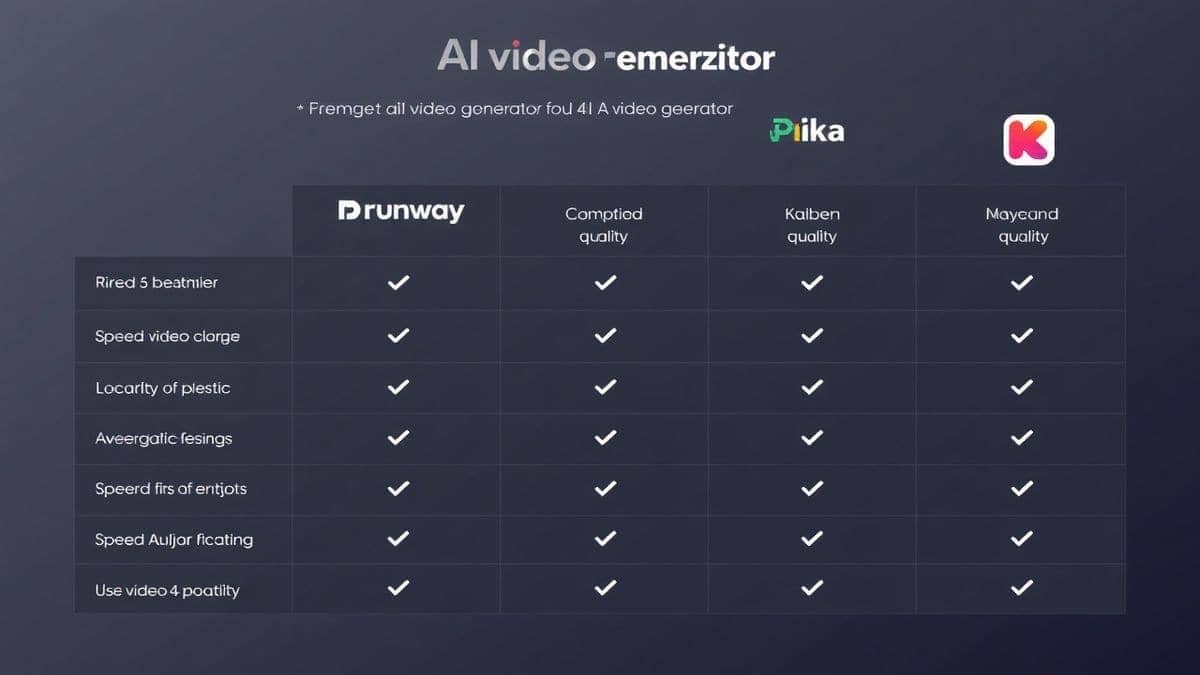
To give you a balanced view, I’ve compared Free AI Video Generator Online – Text to Video & Image to Video with other popular options on the market.
| Feature | Free AI Video Generator (freeaivideo.org) | Runway ML | Pika Labs | Kaiber |
|---|---|---|---|---|
| Price | Free | Paid plans | Paid plans | Paid plans |
| Login Required | No | Yes | Yes | Yes |
| Text to Video AI | Yes | Yes | Yes | Yes |
| Image to Video AI | Yes | Yes | Yes | Yes |
| Generation Speed | Fast (under 1 min) | Moderate | Fast | Moderate |
| Quality | High | Very High | High | High |
| Ease of Use | Very Easy | Moderate | Easy | Moderate |
| Watermark | No | Yes (on free trial) | No (paid) | No (paid) |
From my perspective, the free tool holds its own. While paid tools might offer slightly more advanced editing features or higher resolutions, for 90% of everyday use cases—social media content, quick mockups, personal projects—this free generator is more than sufficient. The fact that there’s no login barrier means you can start creating instantly, which is a massive advantage.
FAQs
1. Is it really free to turn text into video with AI?
Yes, Free AI Video Generator Online – Text to Video & Image to Video is completely free to use. There are no hidden charges or subscription traps.
2. Do I need to create an account?
No, you do not need to log in or provide any personal information. You can start generating videos immediately.
3. What is the difference between text to video and image to video?
Text to video ai generates a video solely from your written description. Image to video ai takes an existing image you upload and animates it, often with motion based on the image content or an additional prompt.
4. How long are the generated videos?
The length can vary, but typically you can generate short clips ranging from 5 seconds. For longer projects, you can generate multiple clips and edit them together.
5. Can I use the videos for commercial purposes?
Based on the tool’s terms, you generally own the output and can use it for commercial projects, but it’s always wise to double-check the latest terms on the website.
6. What languages does the prompt support?
The tool works best with English prompts, but I’ve tested simple prompts in other languages with decent results. For best accuracy, stick to English.
7. Why is my video not matching my prompt perfectly?
AI video generation is still evolving. If the output isn’t what you expected, try refining your prompt with more descriptive words, or adjust the style keywords. Patience and iteration are key.
8. Is there a limit to how many videos I can create?
As of now, the tool is free to use without strict daily limits. However, like any free service, heavy usage might be throttled to ensure fair access for everyone.
9. What resolution are the videos?
The videos are typically generated in standard HD resolutions suitable for social media and web use. Check the tool for specific output specs.
10. Do I need any special software or hardware?
No, everything runs in your browser. You just need a stable internet connection.
Conclusion
The ability to turn text into video with AI has transformed how we think about content creation. No longer do you need a film crew or a massive budget to bring your ideas to life. With accessible tools like Free AI Video Generator Online – Text to Video & Image to Video, anyone—from marketers to artists to hobbyists—can produce stunning video content in minutes.
I’ve walked you through the process, shared my personal testing insights, and given you the pro tips I’ve learned along the way. The barrier to entry is lower than ever. My advice? Stop overthinking and start creating. Experiment with prompts, play with image uploads, and see what this technology can do for you.
The future of video is here, and it’s powered by your imagination.
 Continue with Google