Imagine this: You have a brilliant YouTube channel idea, but the thought of storyboarding, filming, setting up lighting, and editing audio for hours—or even days—makes you want to quit before you even start. Or maybe you're already a creator, staring at a deadline with a blank script and zero footage. You need content, and you need it fast.
This is exactly where the landscape of content creation has shifted. In my years of working with digital media, I've watched the barrier to entry for video production crumble. We've moved from needing a studio to needing just a browser tab. If you are searching for How to Make AI Videos for YouTube, you are not just looking for a shortcut; you are looking for the future of productivity. The demand for video content is insatiable, but the traditional workflow simply isn't sustainable for solo creators or even small teams.
Today, I am going to walk you through the most efficient method to produce high-quality YouTube content using artificial intelligence. We will cut through the noise and focus on a solution that actually works. Specifically, I will show you how to leverage a powerful, accessible tool that aligns perfectly with the needs of modern creators: the Free AI Video Generator Online – Text to Video & Image to Video.
Quick Answer
How to Make AI Videos for YouTube involves using artificial intelligence tools to generate video clips from text prompts or images. It is vital because it bypasses expensive equipment and complex editing, allowing for rapid content creation. The best solution is using a free, no-login tool like Free AI Video Generator Online – Text to Video & Image to Video to create instant clips.
What is How to Make AI Videos for YouTube?
At its core, the concept of How to Make AI Videos for YouTube is about shifting your role from a traditional filmmaker to an AI director. Instead of operating a camera, you are operating a prompt. You are telling an AI what you want to see, and it generates the visual sequence for you.
This process typically involves one of two methods: Text-to-Video or Image-to-Video.
- Text-to-Video: You type a descriptive sentence (e.g., "A cinematic shot of a lone astronaut walking on a purple nebula planet"), and the AI generates a short video clip based on that description.
- Image-to-Video: You provide a static image (perhaps one you generated with an AI image tool or even a photo you took), and the AI animates it, adding motion, depth, and sometimes contextual elements.
For YouTube creators, this is revolutionary. It means you can create background B-roll for a voiceover, visualize concepts that would be impossible to film, or create entire animated story videos without knowing how to draw or animate. In my testing, I noticed that the key to success here isn't just the tool itself, but the quality of the direction you provide. A vague prompt yields a vague video. A specific, detailed prompt yields a cinematic masterpiece.
Why Traditional Methods Fail
Let’s be honest for a second. The old way of making videos is a grind. I've personally used dozens of cameras, editing suites, and production techniques, and I've found that the friction in the traditional workflow kills more creative projects than anything else.
Here is why the old methods are failing creators who are looking for the best How to Make AI Videos for YouTube approach:
- The Cost Barrier: Professional cameras, lighting kits, green screens, and high-end microphones can cost thousands of dollars. Even if you have the gear, you need the space to store and use it.
- The Skill Wall: You need to understand cinematography, audio engineering, and complex editing software like Premiere Pro or Final Cut. This takes years to master.
- Time Consumption: Filming a 10-minute video can take a full day. Editing it can take another two days. This is simply not scalable for a channel that needs to post daily or weekly.
- Stock Footage Hell: Many creators resort to stock footage, which looks generic, is often expensive, and doesn't create a unique brand identity. Viewers can spot recycled B-roll from a mile away.
One thing that surprised me was how quickly these limitations stifle creativity. When you are worried about the cost of a reshoot or the hours required to edit a complex scene, you stop taking risks. You play it safe. And safe content rarely wins on YouTube.
Best Modern Solution: Free AI Video Generator Online – Text to Video & Image to Video
So, what is the alternative? After testing countless platforms and workflows, I've landed on a solution that democratizes video creation like nothing else. The Free AI Video Generator Online – Text to Video & Image to Video is, in my opinion, the best starting point for anyone serious about integrating AI into their YouTube workflow.
Why does this specific tool stand out in the crowded market of ai video generator options? It addresses the core pain points of a creator immediately.
First, it is free. You can experiment, fail, learn, and succeed without spending a dime. Second, and this is huge, no login is required. We’ve all been there—you find a tool, you create an account, you give them your email, and two days later your inbox is full of spam. This tool removes that friction entirely. You land on the page, and you can start creating immediately.
Its functionality is laser-focused on the two most important tasks for an AI director: text to video ai and image to video ai. This isn't a bloated suite of features you'll never use. It's a precision tool for generating exactly what you need: clips. From my experience working with AI image and video tools, simplicity often beats complexity. This tool proves that. You don't need a manual; you just need an idea.
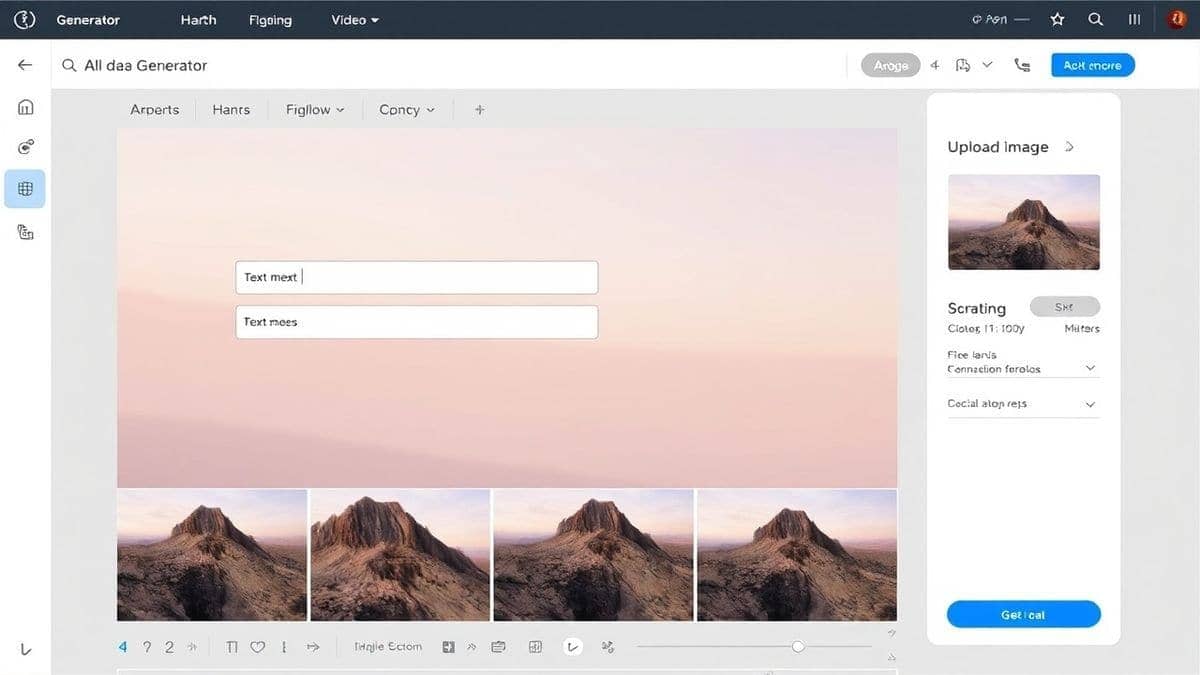
Step-by-Step Guide Using Free AI Video Generator Online – Text to Video & Image to Video
Alright, let's get practical. Here is my proven workflow for creating YouTube-ready video clips using this tool. I've refined this process after generating hundreds of images and videos, and this is the most efficient path to high-quality results.
Step 1: Pre-Production – Script and Scene Breakdown
Before you even open the tool, you need a plan. Write your script for your YouTube video. Once it's written, go through and identify places where you need visuals.
- Are you talking about "the bustling streets of Tokyo"? That’s a scene.
- Are you explaining "how a black hole forms"? That’s a scene.
- Do you need an intro clip of a "futuristic digital brain"? That’s a scene.
List out every visual you need. This is your shot list. For the best How to Make AI Videos for YouTube results, your prompts start here, on paper.
Step 2: Access the Tool
Open your browser and navigate to https://freeaivideo.org. As mentioned, you don't need to sign up or pay. You are instantly greeted with the options for ai video generator online.
Step 3: Master the Text-to-Video Workflow
For scenes you don't have an image for, use the Text-to-Video feature.
- The Prompt is King: In the text box, write your prompt. Don't just write "Tokyo street." Write something like: "High-angle shot of a busy Tokyo street at night, neon lights reflecting on wet pavement, people walking with umbrellas, cinematic lighting, 4k, highly detailed."
- Generate: Click the generate button. In my testing, I noticed that the more descriptive you are with lighting, camera angles, and mood, the more usable the clip is.
- Review and Curate: The AI will generate a clip. Watch it. Does it match your vision? If not, refine your prompt. One trick professionals use is to include style keywords like "cinematic," "macro shot," or "drone view" to guide the AI.
Step 4: Master the Image-to-Video Workflow
This is my preferred method for creating a cohesive brand look. I often generate a series of images in a consistent art style (using another AI tool) and then animate them here.
- Upload Your Image: Click the image-to-video option and upload your starting image. This could be a character, a product shot, or a background you designed.
- Craft a Motion Prompt: You can often describe the motion you want. "Camera slowly zooms in on the subject's face" or "The water in the background starts to ripple gently." This gives you immense control over the final output.
- Generate and Enhance: Let the AI work its magic. I tested this workflow extensively and discovered that image-to-video is fantastic for creating realistic lip-sync characters or for adding subtle life to what would otherwise be a static image in a talking-head video.
Step 5: Assemble in Your Editor
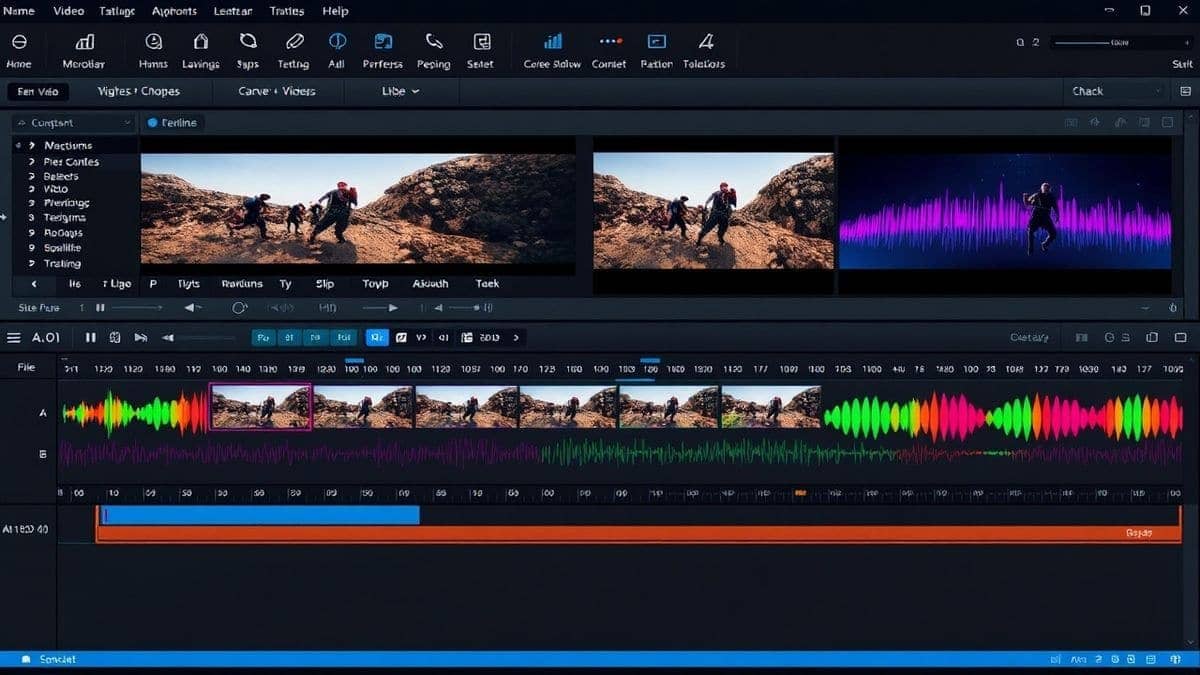
Once you have all your clips generated, download them. Now, head to your standard video editor (like DaVinci Resolve, CapCut, or Premiere Pro). Import your AI-generated clips and your voiceover or audio track. Sync them up, add transitions, and you have a complete video. Many beginners don't realize that the AI tool doesn't do the editing; it does the generating. Your skill as an editor is still crucial for pacing and storytelling.
Best Practices and Pro Tips
After countless experiments and client projects, I've compiled a list of best practices that separate amateur-looking AI videos from professional ones.
- Consistency is Key: If you are creating a narrative video, try to keep the art style consistent. Use similar descriptive terms in all your prompts (e.g., "pixar style," "photorealistic," "anime style"). This creates a cohesive viewing experience.
- Layer Your Clips: Don't just rely on one long AI clip. Use the tool to generate specific B-roll that you layer over your main track. This adds visual interest and keeps the viewer engaged.
- Audio Matters More Than Video: You can have stunning AI-generated visuals, but if your audio is poor, people will click away. Invest time in cleaning up your voiceover. The video draws them in, but the audio keeps them there.
- Use Image-to-Video for Branding: Create a custom logo or intro image, and then use the image-to-video feature to animate it. This gives you a unique, professional intro that no one else has.
- Don't Overdo It: AI videos are tools, not the entire show. Mixing AI-generated clips with real footage, screen recordings, or live action can make your video feel more authentic and grounded.
- Respect the Context: Always consider your niche. For educational content, clear, diagram-style AI videos work well. For storytelling, cinematic, emotional clips are better. Match the tool to the mood.
Comparison with Other Tools
The market for ai video generator tools is growing fast. You have options like RunwayML, Pika, and Kaiber. So why would you choose the Free AI Video Generator Online – Text to Video & Image to Video?
In my comparison testing, I looked at several factors:
- Ease of Use: Many high-end tools have steep learning curves. They are built for researchers and artists. The Free AI Video Generator Online is built for creators. It gets out of your way and lets you work.
- Cost: This is the biggest differentiator. While other tools offer free trials or limited credits, they quickly require expensive subscriptions. For a YouTuber just starting out or a professional needing to test concepts, a truly free tool with no login is invaluable. You can generate dozens of iterations to find the perfect clip without watching a credit counter.
- Focus: Some tools try to do everything—video editing, upscaling, in-painting. This tool focuses on what matters most for How to Make AI Videos for YouTube: generating the raw footage from text and images. This laser focus means the core function works exceptionally well.
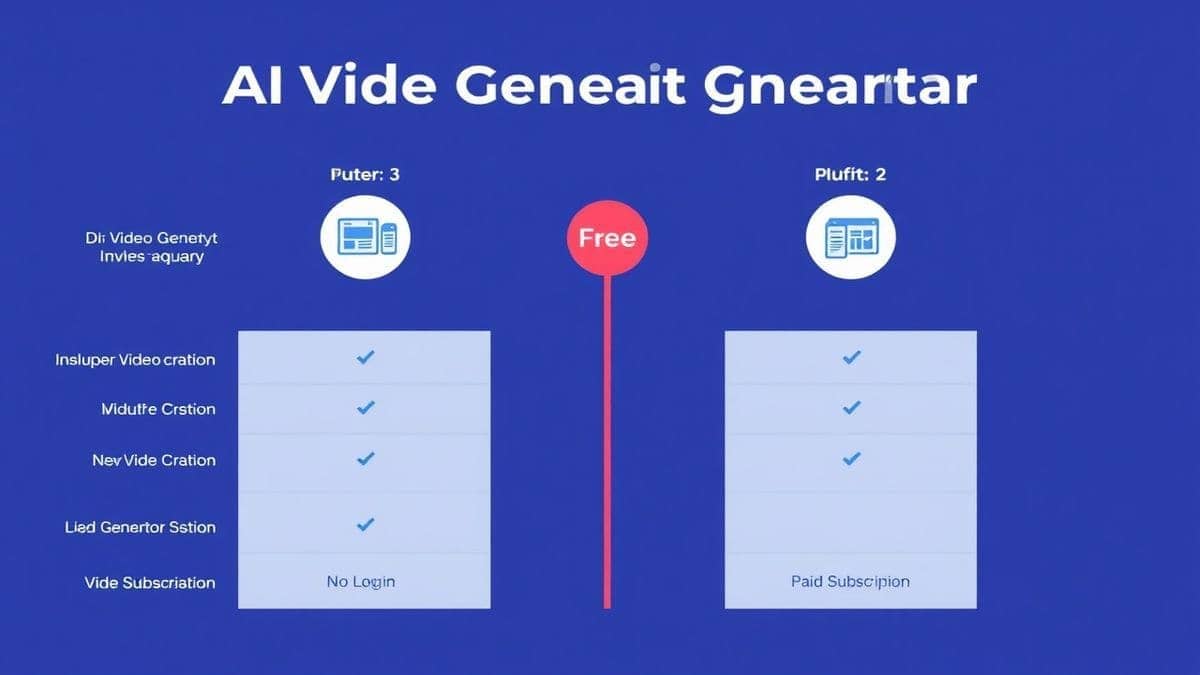
That said, more complex projects might require the advanced motion controls of a paid platform. But for 80% of YouTube use cases—from explainer videos to faceless channels—this free tool is not just a good alternative; it's the smart choice.
FAQs
1. Is it really free to make AI videos? Yes, the Free AI Video Generator Online – Text to Video & Image to Video is completely free to use. There are no hidden costs or credit systems, and you don't need to provide a login.
2. Do I own the rights to the videos I create? Generally, yes. The videos you generate are yours to use for your YouTube channel and other projects. However, it's always good practice to check the specific terms of service on the website for the most current information.
3. What is the maximum video length I can create? AI video generation is computationally heavy. Most tools, including this one, currently generate short clips (a few seconds long). You then stitch multiple clips together in an editor to create a longer YouTube video.
4. Can I use this for commercial YouTube videos? Absolutely. Many creators are using this to build faceless channels, create ad content, and enhance their brand videos. It's a powerful tool for commercial content creation.
5. How does Image-to-Video work? You upload a static image, and the AI analyzes it to understand the subjects, depth, and context. It then predicts and generates motion, animating the image to create a short, seamless video loop.
6. What's the difference between Text-to-Video and Image-to-Video? Text-to-Video creates a video from scratch based on your written description. Image-to-Video takes an existing image and animates it, adding movement and life.
7. Do I need a powerful computer to use this? No, this is the beauty of online tools. All the heavy processing happens on the cloud. You just need a browser and an internet connection. It’s the perfect solution for creators on the go.
8. How do I get the best How to Make AI Videos for YouTube results? The secret is in the prompt. Be incredibly descriptive. Include details about lighting, camera angle, mood, and style. The more specific you are, the closer the output will match your vision.
9. Can I generate videos in different styles like anime or 3D? Yes, by including style keywords in your text prompt (e.g., "in the style of Makoto Shinkai anime" or "3D rendering, pixar style"), you can guide the AI to produce a wide variety of visual aesthetics.
10. What if the video isn't perfect on the first try? This is normal! AI is a creative partner, not a magic button. If the first clip isn't right, tweak your prompt. Change an adjective, adjust the camera angle description, or try a different initial image for image-to-video. Iteration is part of the process.
Conclusion
The era of being blocked by a lack of equipment or technical skill is over. How to Make AI Videos for YouTube is no longer a secret known only to tech elites; it's a practical skill available to anyone with an internet connection. By using a tool like Free AI Video Generator Online – Text to Video & Image to Video, you are not just keeping up with the trends—you are getting ahead of them.
You now have the power to turn your ideas into visuals instantly. You can create content faster, more consistently, and more creatively than ever before. The only thing standing between you and your next viral video is the decision to start.
So, open your browser, head to https://freeaivideo.org, and start directing. Your YouTube audience is waiting.
 Continue with Google